


Judo for Kids (5–12)
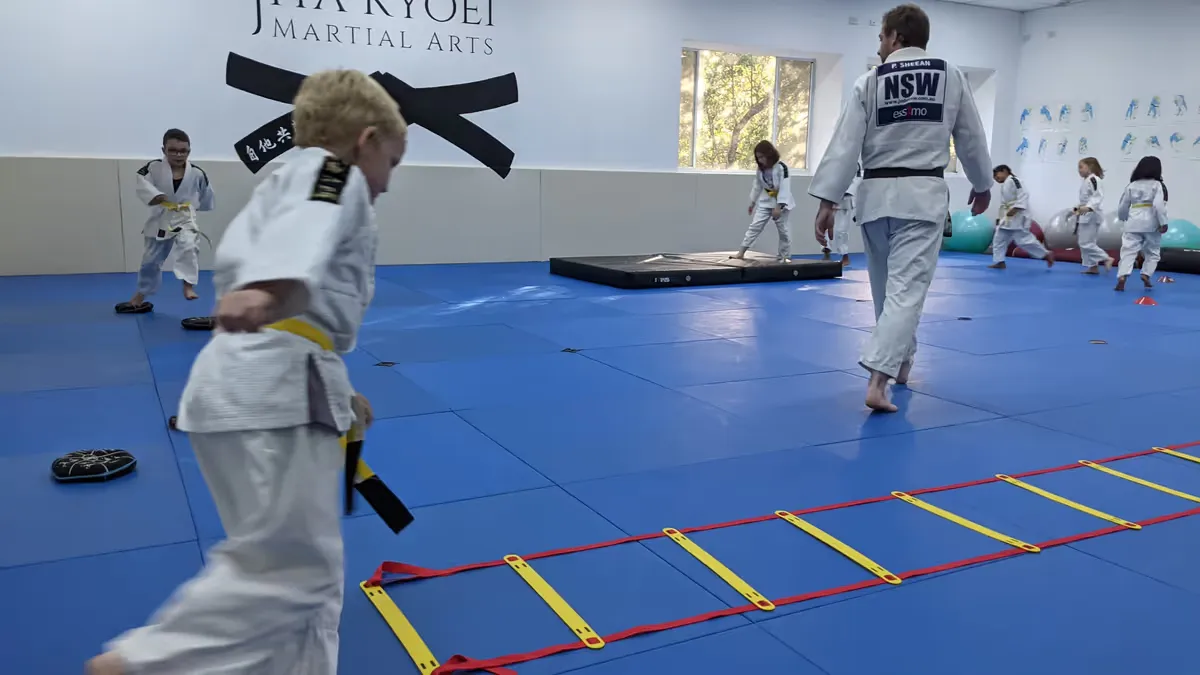
Judo gives children a safe outlet to wrestle and roll around under supervision, which is exactly what many of them want to do anyway.
The rest arrives underneath it. They learn to fall without hurting themselves, to look after the person they are working with, to wait their turn, and to keep at something that did not work the first time.
Looking after your partner is more than manners. You cannot get better at Judo without someone to practise on, and they cannot get better without you, so helping them improve is how you improve. Judo has a name for this: Jita Kyoei, mutual benefit, one of the two principles the art was founded on.
We split the weekday classes by age so each group gets what it needs, and bring everyone together on Saturday mornings. All of them run during school terms only. Bring a drink and something comfortable to move in. That is all they need to start.
Ages 5–8
Our youngest class is built around simplified Judo concepts, focusing mainly on safety and body awareness. There are plenty of games, and the harder ideas are introduced gradually. They also do groundwork randori regularly, which is free practice against a partner who is genuinely resisting: keeping it on the ground means they can go at it as hard as they like without much risk of anyone getting hurt.
Belts are awarded for effort and attitude as much as for technique. The technical requirements are still there and still have to be met, but at this age we care just as much about whether a child is trying, listening, and looking after the people they train with. Working hard at something difficult counts for as much as being the tidiest in the room.
Ages 8–12
The older group spends more of its time on technique: how a throw actually works, how to break a grip, how to hold someone down and how to get out when it is you being held. Games do not go away, they get sharper, each one set up so the skill being worked on is the only way to win it.
Standing randori is introduced here alongside the groundwork, and it is a real step up: throwing, and being thrown by, someone who does not want it to happen. This is where technique starts to become theirs rather than something that only works when a partner cooperates.
Each belt has a clear set of requirements to work through, and for a lot of the kids the next grading becomes the thing they aim at.
Those who want to compete can, and we will prepare them for it, but nobody has to.
Saturday: all ages together
On Saturday mornings both age groups train together. Helping a younger child get something right teaches the older one just as much, and the younger ones get to see where they are heading.
It is a relaxed session and a good one to start on if you are bringing a child along for the first time, or if the weekday times do not suit.